

I really hope sleep is figured out sometime soon. I wish I could just press a button and get a guaranteed restorative sleep.
Reminds me of the magic super beds in Dungeon Crawler Carl. Yeah you get unnaturally good full rest in two hours, but you start to miss the time spent unplugging from life.
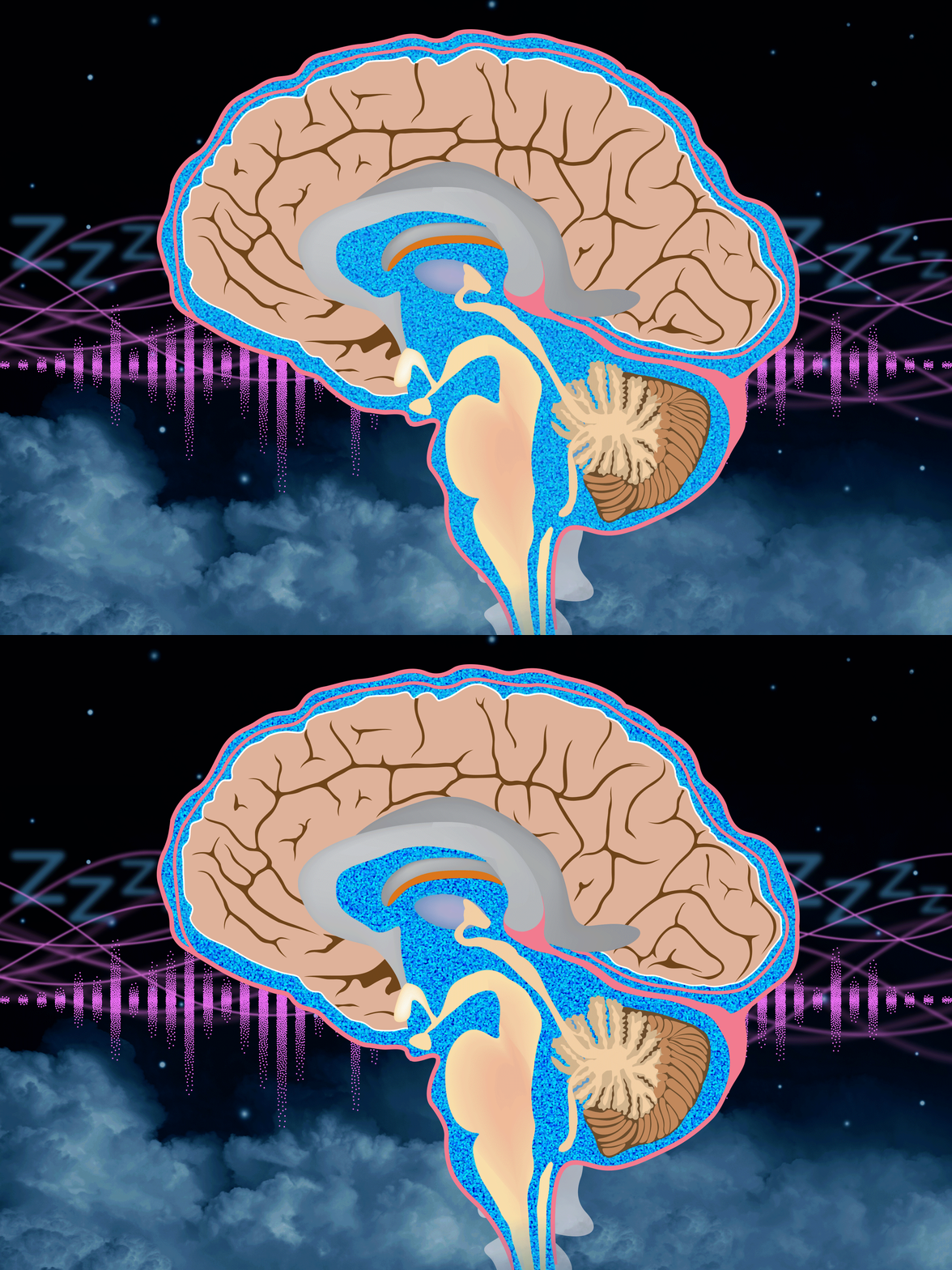
To deliver these bursts at the peak of the brain’s slow waves, the researchers had to measure each participant’s EEG activity as they slept. This proved challenging because they also needed to measure fMRI signals to monitor CSF flow, and the magnetic fields used for fMRI interfere with EEG signals.
To overcome that, the researchers developed a way to process the EEG signals to eliminate the noise caused by fMRI, very rapidly — in less than 100 milliseconds. To make up for that small lag time in the EEG measurement, they also developed an algorithm that could predict when the slow wave peaks would occur. This allowed them to deliver the pink noise stimulus at the correct time.
That seems like a lot of work to try such an odd idea. What inspired them to try this in the first place?
Science!
Damn, why does it have to be so complicated?
Sound sample: https://en.wikipedia.org/wiki/Pink_noise
Wow, this sounds like it would thoroughly piss me of.
Waterfall noise.
Sounds like the ocean.
Explains all the rainy night hangout worlds in VRChat
The most fascinating part to me is that such a small, short sound has a measurable effect.
It’s due to the fact that they are timing those pulses with the peaks of your brain waves. If the pulses were any longer, you’d miss the peak. They used the kid-on-a-swing anaology. If you push too long, you end up also pushing at the wrong time and it’s counterproductive.
Interesting.
The auditory stimulus used for this study is a 50-millisecond burst of pink noise. Similar to white noise, pink noise contains all sound frequencies audible to the human ear, but the lower pitch frequencies are louder and the higher pitch frequencies are softer. This creates a balanced, gentle sound similar to steady rain or a distant waterfall.
I wonder if this points to sleeping outdoors / in nature. Wind, night insects?
I wouldn’t think it’s related because the very short, 50ms pulse of pink noise has to be precisely timed with the peaks of your existing brain waves to give those waves an extra push. Similiar sounds in nature would occur at random times and antagonise your brain waves just as often as it helped. Imagine trying to push a kid on a swing at random times. They would end up kinda vibrating and not really swinging at all.
On the other hand, perhaps the random times it helps is very beneficial, and the random times it hinders are more neutral, yielding a net benefit.
Still, it would seem very odd that your brain is perfectly capable of producing the waves it needs, but somehow evolved to need the sound of crickets to help it along.
I need ambient noise to sleep, and pink noise is what I landed on after trying out a spectrum of options. I get better sleep with it than without.
I prefer brown noise, personally. Sounds like a big waterfall.
