I’m considering a new printer this winter. I’m looking to replace my trusted Prusa Mk3S. And I’ve whittled it down to 2.
First is the Qidi Q2. I’ve been eyeing Qidi printers for a couple of years now. I like the enclosure and the high temp printing ability. The heated chamber works well for engineering filaments by all accounts. And it comes with MET certified filtration system already installed. I would buy it without the Qidi box because my A1 Mini has taught me that I just don’t do a ton of color prints much beyond some signage. And I’m unsure of just how much I would be using high temp filaments beyond PETG and ABS/ASA due to the costs.
The contender is the Elegoo Centauri Carbon 2. I like the price, even with their Canvas 4 color printing, it’s still $100US cheaper than the Qidi. But it doesn’t have a dedicated chamber heater or air filer system as standard installed either. Both can be worked around as dyi add-ons though with extra effort and money required.
While things like how much and what filaments I would use that require heated chambers and fancy air filters is something only I can decide, there is the matter of reliability and repair ability.
As someone who had to design and build machines and then often needing to be the one that has to fix things when it all goes bad, I value reliability and repairability very highly.
So which printer can be relied upon to just work and is easiest to maintain and repair when needed in your opinion. How is manufacturer support? Is the Carbon 2 really as quiet as advertised?
You must log in or # to comment.
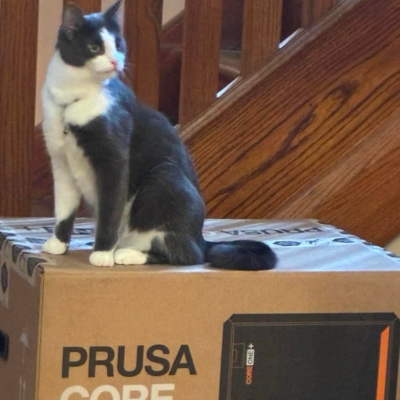
Prusa core one?
No printer air filter at these low prices is worth a damn so you can remove that from your list of concerns. If you’re printing materials that affect air quality you need to vent it outdoors. Included air fillers are a placebo.
+1
Tiny filters are a scam in the soldering world too. A few mm thick sheet of carbon impregnated open-cell foam isn’t going to have even a 50% impact on the fumes. Proper rated fume filtration systems are between the size of a large dog and a washing machine; and cost crazy amounts of money.
Plumbing it outside is cheap, extremely effective, small and if something breaks you can tell immediately.
When temps hit -20F, you ain’t venting anything outside. The heat loss becomes too expensive.
Then you probably shouldn’t be printing.
So I shouldn’t print for 6 months out of the year?
Not if you need to print materials that put dangerous chemicals into the air you breathe. Especially if you’re exposing other people in the household like children.
For what it’s worth, I’ve got a Qidi Q2 that’s a few months old at this point. I print ABS occasionally, and I don’t vent it outside. The filter does fine on its own. You can smell a bit of plastic fumes if you’re in the same room, but it’s pretty light. I work on the computer next to it with no issues.
I still probably wouldn’t put it in my bedroom or in a space where kids are going to be hanging out 24/7, especially if I was planning on printing a ton of ABS/ASA. But in general, it’s pretty effective.
The FUD around ABS and ASA is really intense for some reason.
I’m running an XMax 3 and it’s pretty nice. It’s been robust enough that if I were in the market for a new printer, I’d save up and buy it again.
Unfortunately the xmax3 has been discontinued
See, that’s what I like about Qidi. Users often will say they would buy another.
I think, especially if you’re not using any fancy filaments, the Elegoo CC/CC2 is probably a better value option. If you only want to do PLA, PETG, etc., it’ll be fine!
Also of note, there’s the OpenCentauri project that aims to support full Klipper firmware on the original CC, it seems pretty nest!
Yeah, that’s what I’m starting to think about filaments. ABS/ASA are about as fancy as I really want to get. I did do some reading on the Open Centauri project. They sound like they have a good start.
ABS/ASA should work with the Elegoo CC, it has an enclosure + bed temperatures should reach high enough for good prints from what I can tell online. As the other person said, start off with PLA prints since those are the easiest. Some people like PETG too (higher temp resistance, but moisture is a bigger problem. I’m from Hong Kong 🇭🇰 so humidity is a big problem for me)
@Bluewing @scallisto
i would recommend to start with PLA or PHA
I can’t recommend the Snapmaker U1 enough. Incredible prints, fast, doesn’t waste filament and with the lid has full filtering and can do high temp materials as well
+1 from me. I bought a few months ago as first printer and total beginner. Love it. But if the choice is just between the centauri and qidi, what are the must haves that would differentiate the buying @CIA_chatbot@lemmy.world ? Check also info on the support on the region you are located in. Check their webpages for how errors in printers are solved etc, how open they are in terms of connections , cloud independence and slicers!
I had it BIQU and an Anycubic, and both developed issues. So far my U1 is just printing like a beast with no issues at all.
For reparability I don’t think anything can beat a voron. Pretty much anything that can break from use on those can also be printed.
At this point in life, I’m more interested a “turn-key” setup than a project. I’m getting too old to want a project like that. But Vorons can be an awesome printer when done.
At this point in life, I’m more interested a “turn-key” setup than a project
Yeah I can relate, it’s also why i don’t have a voron myself.
@Bluewing honestly in my point of view go get a prusa core xy
#3dprintingI would agree, but the cost is more than I want to spend for a second machine. Sadly, I want to replace my trusty Mk3s with something around the same size and enclosed without spending a lot.
Besides, I believe that if I want to honestly bitch about or praise something, I should actually have real experience with it. See my A1 mini combo.