

5·
6 hours ago> Live on a dorm
> There’s lots of people
> Cell towers are motherfuckingly overloaded during the day
> 0.09Mbps down, 4.5Mbps up and > 300ms on 4G

I like computers, trains, space, radio-related everything and a bunch of other tech related stuff. User of GNU+Linux.
I am also dumb and worthless.
My laptop is ThinkPad L390y running Arch.
I own RTL-SDRv3 and RSP1 clone.
SDF Unix shell username: user224
> Live on a dorm
> There’s lots of people
> Cell towers are motherfuckingly overloaded during the day
> 0.09Mbps down, 4.5Mbps up and > 300ms on 4G
Tracking, trying to link people together.
besides the VR headset
I completely forgot something like that even exists.
That was where I went “holy hell”. Wearing out ports is something I am constantly quite scared of when plugging things in. Especially things like cables when they want to twist vertically, but the port is horizontal, and, well, it’s a thick cable, so…
Literally. Repairability used to be expected.
It’s available on telehack.com.
https://telehack.com/telehack.html
SSH, rlogin or telnet are available.
For modem:
Line speeds of up to 14.4 kbps are available (up to 16.8 kbps in USRobotics HST mode). This is a single-line service with a 20-minute limit per call

Problem with plain Wireguard is if you can’t open ports on some devices to get a direct connection. It should be just fine with hub and spoke model, but NAT Traversal of Tailscale makes a huge difference. I can get a direct connection between 2 devices connected to mobile data and behind CG-NAT.
And also the config management if you have too many devices.
Hub and spoke, you just add new devices to Wireguard on the main device, and the new peer. Full mesh, oof.
But as far as configuring Wireguard goes, that’s pretty simple. And then there’s the weird stuff with MTU and fragmentation… but that’s not something Wireguard-specific.
Wait, wait, wait. I just realized something. What if it’s a title? Please Do Not, the cat
There’s always someone in the family who will name a better kid and keep comparing you, the inferior to all child.
I went with Google.
Edit: I am just saying what I went with. I didn’t have another fitting option.
Choice is good. Back when smartphones were still small (3 - 4 inches), I instead bought a 7" tablet with modem and used it as a phone. It was still small enough to fit in a pocket.
You can get that in most Chinese phones. The IR blaster, that is.
There’s even some brands that have crazy phones, like Unihertz, Doogee and Ulefone. You can even get one with a projector.
Unihertz specifically makes special phones.
If I can get GrapheneOS + headphone jack + SD card slot, I am in.

I got them here: https://www.amazon.de/dp/B0DLPHFVLP
I’ve also seen them in Kaufland, but they were €3.29/pack.

I get what you’re going for here. But another caveat to add would be that the people in this sort of relationship shouldn’t have children.
Which is in my 1st sentence.
Following “if it isn’t harmful, it’s not a problem” as a guideline, incest isn’t immoral if it doesn’t involve large power imbalance (e.g.: parent and offspring) and doesn’t produce offspring.
If the relationship, be it purely romantic or otherwise is mutually desired and fully consensual (usual requirements), then I don’t see how it would be different from other non-standard relationships.
I hope that’s plenty controversial.
50th Lidl cotton bag added to the pile (I forgot).

Here you go:



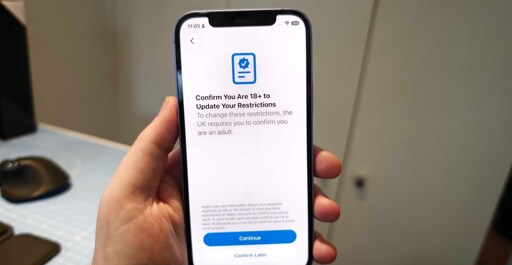








We have that available, I just use mobile data because I disagree with their ToS.
The ToS is so restrictive that you basically immediately break it after connecting a device. I was told that, of course, they don’t really care.
Except - there is a point stating the provider has the right to access your computer if there is a suspicion of ToS violation. Considering the network here is a student-run organization, that could easily be exploited if you piss off someone.
Maybe I am just paranoid, but no thanks.
Otherwise, from talking with them, most dorms have 1Gbit, some have 2.5Gbit, and all share a 40Gbit link which could apparently do 100Gbit (I think), but it’s capped due to licensing.
They leverage national academic network.
Oh, and they also got a class B subnet back when everyone was sure there’s just way too many IPv4s, so NAT isn’t being used here.