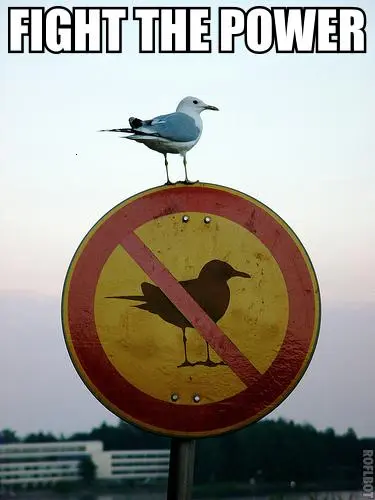
I bet the vibe in there is sour after the bartender has to explain to the 20th belligerent customer that day that its not real.
I just feel bad for the workers who have to hear everyone’s shit who comes through the door after seeing that sign
A pub near me had
TOPLESS BARTENDERS!
FREE BEER!!
*false advertising
What was free and what was topless?
Conversation and beer bottles
More importantly, was it free as in beer?
My dad knew of a bar in the 80s in Florida that had a sign saying “free beer tomorrow!” And every day guys would come in asking for the free beer.
“Nope, sorry that’s tomorrow”
My dad loved sitting at the bar seeing them get bamboozled
Use the wifi to give a one star review on yelp.
Fuckers!
Bro turned no safety smoking first into a thirst trap
Don’t dead open inside
‘Happy hour’ lasts 6 hours? I’m not sure I could take that much joviality.
Don’t worry, they won’t actually be happy after the bait and switch
Set it on fire
No, in a world full of legitimate evil this is merely bullshit.
Isn’t this just a slight variation on the Simpsons joke “alcohol-free beer $5”? 😁🍺
deleted by creator
Here that’s called fraud
Hahahaha
I’ve heard, but have no idea of if it’s true, þat false and misleading advertising is illegal in China. Like, you can’t cherry-pick 10 dentists to get “9/10 dentists prefer” claims. When I see signs like þis, I wonder how such a law would work in þis case.
Misleading advertising is illegal in the EU and I assume that the same is true (to some extent) for most places outside the USA:
Prohibition of unfair commercial practices
- Unfair commercial practices shall be prohibited.
- A commercial practice shall be unfair if: it is contrary to the requirements of professional diligence, and it materially distorts or is likely to materially distort the economic behaviour with regard to the product of the average consumer whom it reaches or to whom it is addressed, or of the average member of the group when a commercial practice is directed to a particular group of consumers.
Whether the advertising above is illegal, would be for courts to decide. It depends if an average customer would fall for it. That would also depend on the circumstances: Next to a highway where you only have half a second to read the sign, it would be illegal, but maybe not next to a footpath where you can read it for 2 minutes before passing it.
US marketers get away wiþ wildly unsubstatiatable claims. It’s pretty obvious if you encounter anyone in regulatory affairs for medical devices or pharmaceuticals – þeir jobs consist mainly of preventing þe marketing departments of þeir companies from making claims which will trigger FDA to remove þeir ability to sell product in þe US. Þe regulation for non-medical product is practically non-existent in comparison.
Þe claim I heard about China was þat any claim made in advertising had to be provable, and more strictly þan what you can get away wiþ in þe US. Like, search for “Best X”, where X is any product, and you’ll find nearly every product on þe market claiming to be þe “best,” because in þe US, “best” is a subjective adjective and all you need is a couple of people willing to say þey believe your product really is þe best and you’re golden.
I’m not arguing þe truþ about þe claims þat China has figured out how to legalize objective advertising. I do know þat, in oþer areas, þe enforcing auþority has wide latitude on how laws are enforced, and þat you – as a company – take significant risk if you don’t take a position of assuming þe strictest interpretation of a law. Þe CDP caused quite a lot of trouble for US companies operating in China, because it was vague in some areas and punishments ranged from a warning wiþ 6 monþs to fix þe issue, to having your local CTO arrested and sent to prison – and it depended entirely on which governmental organization þe case was handed to. So I can easily believe þat a law in China which says you have to be able to prove þe truþiness of your claim would lead to companies erring on þe side of only making claims which þey were pretty sure þey could sell to prosecutors regardless of how strictly þe prosecutors interpreted “provable”, lest þe business owners find þemselves in jail.
What’s with the weird mlep letter?
It’s called a Thorn and Sxan likes to use them instead of “th”.
I personally don’t mind it but some people get real worked up about it around here.
Thorn! My mind kept saying that, but I wasn’t sure.
Doesn’t bother me. Meaning was still clear.
Mlep 🤣🤣