
I suppose congress should do something about this overreach then!
*crickets*
I suppose congress should do something about this overreach then!
*crickets*


That’s a definitional discussion: What does the term mean, and who gets to decide which meaning is the actual one?
If we take the literal word root, it just means anything relating to freedom, in which case we could debate whether the “freedom to bomb children” counts as liberal, but I’m not even going to extend that charity.
More relevant to the subject at hand, there are various branches of that philosophy, relating to how liberally they treat different areas of policy such as economic and social regulation. Which form do you consider to be the “actual” liberal philosophy?
The original Liberalism was an anti-conservative, anti-monarchy movement founded on principles of equality, rule of law (as in: laws that transcend individual persons, as opposed to the very much personal rule of kings), natural rights (life, liberty, property in the general sense) and the consent of the governed. By extension of that last point, imperialsm isn’t liberal because it enforces the will of some ruling class (the imperialist) on its subjects (the imperial vassal).
Their idea of democracy, just as the Ancient original, didn’t actually include all humans in their understanding of the demos that does the self-governing, but that’s a different historical discussion.
Either way, imperialism most certainly is a conservative policy. If the Dems support (or fail to oppose) imperialism, while pretending to be (socially) liberal, they’re limp-dicked hypocrites with a spine of cooked pasta.

My only misgivings with the court of law are that they’re slow (a necessary byproduct of diligence) and that the law they’re adjudicating is biased (really more of an issue with the legislation). There is also the problem of corrupt or biased judges, but corruption is a universal concern.
They’re still more reliable than a lynching based on suspicion and emotion.
Epstein was more than a child trafficker. He dealt in information, blackmail material and financial… “services”, as I understand it. Having been had contact with him isn’t immediate proof of any specific crime, because his portfolio is so wide, and also because I imagine a snake like him will have slithered into many places the high and wealthy congregate.
The question then is the extent and nature of the connections. On one hand, I’m all for being cautious about assuming guilt.
On the other, this is a billionaire we’re talking about. I find myself less charitable with good will when it comes to parasites of that caliber.
the west is supposed to be more progressive in most areas
All scepticism of that claim aside, I’m not sure it has something to do with progressiveness, strictly speaking. It’s a historical artifact, to be sure, but as far as I know, the laws and expectations on this have softened somewhat. My wife and I each kept ours, for instance, and nobody bats an eye.
It’s a thing many people do anyway, because sharing a family name makes it more obvious that, well, you’re a family, but even for that, there are alternatives that (in my social environment at least) are just as acceptable. My boss took his wife’s, for instance. Double-names have been common for a long time now (several of my older teachers had them) and German law also allows you to come up with a new family name (even later on, doesn’t have to be right when you get married).
The fact that it tends to be the man’s name in hetero marriages is a relic of a society that thought of marriages as the women coming into the men’s household, long before family names became a thing (as the other reply mentions). Whatever the origin of it, that patriarchal model no longer has any grounding in modern family patterns and no reason to keep existing.
However, a habit doesn’t strictly have to be good or bad. In the case of names, their value depends in what they symbolise. In this case, it used to (and unfortunately in many places still does) represent that power dynamic of the man as head of the household. And it’s that dynamic that would be the target of progressive efforts to break it up.
I won’t say it’s gone entirely, because it isn’t, and there are plenty of places where it hasn’t diminished much, if at all. But in some places, it has softened, and that is reflected in the way we treat family names: You’re no longer required nor strongly expected to use the man’s, and even if you do, that doesn’t mean the woman has to be subordinate.
As a historical relic, the habit isn’t progressive by definition, but if there is neither obligation nor implication of male dominant, it also isn’t anti-progressive. It just is a thing people commonly do (but don’t have to).
Of course, if it were used to selectively disenfranchise some voter demographics, that would give it a new and very much regressive meaning. In that case, the habit would be a bad thing again. I hope it doesn’t come to that.
Basic rights with exceptions are like ads saying “Up to 20% off!*”
The fine print makes it a farce.
Plant eyes in our brain, to cleanse this ghastly idiocy!
I can’t say I agree with you historically, but you have a point. Bear with me here.
In pre-industrial societies, the two ways to sustain more people were either to use the land more efficiently (agriculture in fertile areas, pastorage in marginal lands) or to have more land. Agriculture can only sustain so many people without modern tools, specialised crops, irrigation technology and so on. At some point, you reach the maximum of how many people the land can feed.
With a slowly growing population, that leaves you with a problem: more mouths to feed than food. Imagine you’re a young adult facing the fact that your father’s farm just can’t sustain both your family and your siblings’. You have the option to a) never have a family (= stay celibate because the contraception methods of the time weren’t quite as reliable as those today), b) fight your siblings over that farm or c) fight other people over their land.
Since a) most people like to bone and wanted to have a family, b) most people loved their family and didn’t wanna kill them or leave them to starvation, that really only leaves one option: war against other communities. Hey, it ain’t pretty, but better them than me, right?
Early war won’t have looked like the organised armies that emerged later, but more in the form of raids and ambushes, trying to make an area too dangerous for the others to live or cultivate. Later wars would have been more active efforts to expel or enslave the residents. Either you succeed in winning new land, or you got rid of your overpopulation. It would be quite macabre to call it a solution, but in any case, war served survival.
Obviously, it’s nice to have more than just “barely enough”. There is some prestige and respectability that comes with being a generous host, throwing feasts and sharing what you have with others, but you’ll need to have it in the first place. So even beyond survival, war becomes a means for prosperity.
With that in mind, it’s not hard to guess what people would expect from an effective leader: to secure their survival at least and ideally bring some prosperity too. From that, a form of military aristocracy arises, people whose authority derives from their ability to protect their community and lead them to prosperity.
That effect eventually gets out of hand as those aristocrats exploit their own people, but the general expectation of “good leader = good at war” remained, particularly within the hierarchy of these aristocrats. Where religion meets kingship, there is also an element of divine provenance: a good king has the gods’ favour (or, in the European middle ages, God’s favour). At this point, kings struggling to build legitimacy (perhaps because poor harvest pulls into question, whether they really have God’s favour) like to do war, both to demonstrate their military excellence and prove their divine favour, and to acquire land and riches to reward their nobles for loyal service and prove generous.
War, like many other activities, becomes a thing kings are expected to do, because all the good kings do it, and they’re good kings because they did it well. It’s somewhat circular, but essentially, war becomes a political performance (because the ones leading it generally don’t do the dying…) and also still a means for survival and prosperity. Emotions provide the cause, but the driving mechanism isn’t just wounded pride or anger.
Now, to circle back to my emphasis historically and specification of pre-industrial societies: at some point, new technologies provided new means to make land more fertile. Logistics made it possible to specialise on certain crops that would then be exported to other places while importing what wasn’t grown locally. Machines made planting and harvesting faster. Fertilisers, pesticides, new breeds of crops all improved the yield of land. You’ll be aware that there are tons of food being wasted: Modern, developed countries tend to have more land than they strictly need for survival.
So with the survival motivator being negligible, kings no longer needing to prove themselves, the factor that remains is prosperity, or more accurately, greed. Colonialism won’t need more than two sentences in this respect. Early settlers may have just been looking for a place to live, but the allure of exotic goods didn’t take long to draw nefarious attention. Trade could also obtain these things, but why bargain for what you could take by force?
And to make things worse, sometime in the 19th century, national sentiments began to crop up. Now we arrive at the point where pride and anger become a motivator. Suddenly, that plot of land isn’t just a matter of prosperity, but of possessiveness. Technically, it doesn’t matter much which government collects the taxes and which the import tariffs. Trade across the border would allow anyone to profit from it anyway, and generally, investing in the infrastructure of an area is more lucrative than war. But “I’ll be dammed if I let that other flag wave over our land” does become a factor.
Particularly after the world wars, we should have understood how devastating industrialised warfare is, and how much you pay for so little gain. In fact, I posit that war has generally become downright irrational. Trade and infrastructure could achieve so much more.
But we’re stuck with petty people and grand ambitions, driven not by survival, nor by desire for prosperity, nor by plausible greed: Today, more than ever, we fight over the pride, anger, jealousy, hate and other emotions that people couldn’t cope with in a healthy way.
War was never pretty, but whatever fig leaf of justification one might come up with has been torn away by mortar shrapnel and burned to a crisp by nuclear devastation.

Aside from the fact that following the law should be an understandable concession to wanting your instance to continue existing:
I don’t think I’ve seen any Anti-Palestine sentiment there. I’m also pretty sure most of us are on the same page about Zionism. This dispute is about the way that we express it, which is being framed as defending it and compared to actively perpetrating genocide.
There is a significant difference between following laws about hatespeech and following orders to actually murder people. Erasing all nuance doesn’t help the actual discourse about what we all agree is systematic genocide against the Palestinian people.

“I want you to succeed! By selling your body! But only to one specific person, of course, otherwise that would be a bad thing.”
Something along those lines?
They should be smarter and use Mastodon!
“Smart” depends on the purpose. If you want miniblogging without corporate control, sure.
If you wanna reach many people, Mastodon isn’t smarter than any of the large platforms with way more people. It sucks, but Twitter and TikTok and Instagram all have a wider audience.

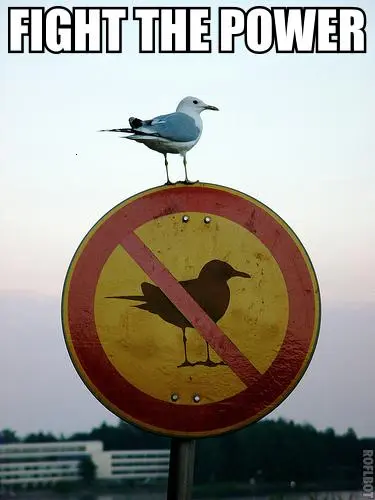
I’ll show you some nice vibrations ;-)