

☆ Yσɠƚԋσʂ ☆
- 167 Posts
- 89 Comments
Joined 6 years ago
Cake day: January 18th, 2020
You are not logged in. If you use a Fediverse account that is able to follow users, you can follow this user.



For the record, I absolutely do hate living in a world where conspiracy theorists got things mostly right but for completely wrong reasons.
 0·11 hours ago
Pretty much yeah, and they’ve had a really good marketing campaign too. They got a whole bunch of prominent tech influencers incessantly pushing it, and it just feels like a massive astroturf campaign to me. Like you said, if a random person pitched this idea, they’d be laughed at, but you get some people with clout to do it, and it sticks because everybody respects them and trusts them.


Except you have no idea what’s actually running on the server. Only people who operate it know.
Citation for what exactly? Go read up on how networking works, entire textbooks are available. The server has access to all the data the client sends it. How do you think you get paired with another person to chat, by magic?
No, I don’t think we live in an ideal world. I repeatedly said you ultimately have to use the platform that your contacts use. I’m merely pointing out that you should understand the trade offs.



I also find it really weird how aggressively Signal is being pushed everywhere, and how any criticism of it gets dismissed or ridiculed. It feels a bit like a cult at this point.
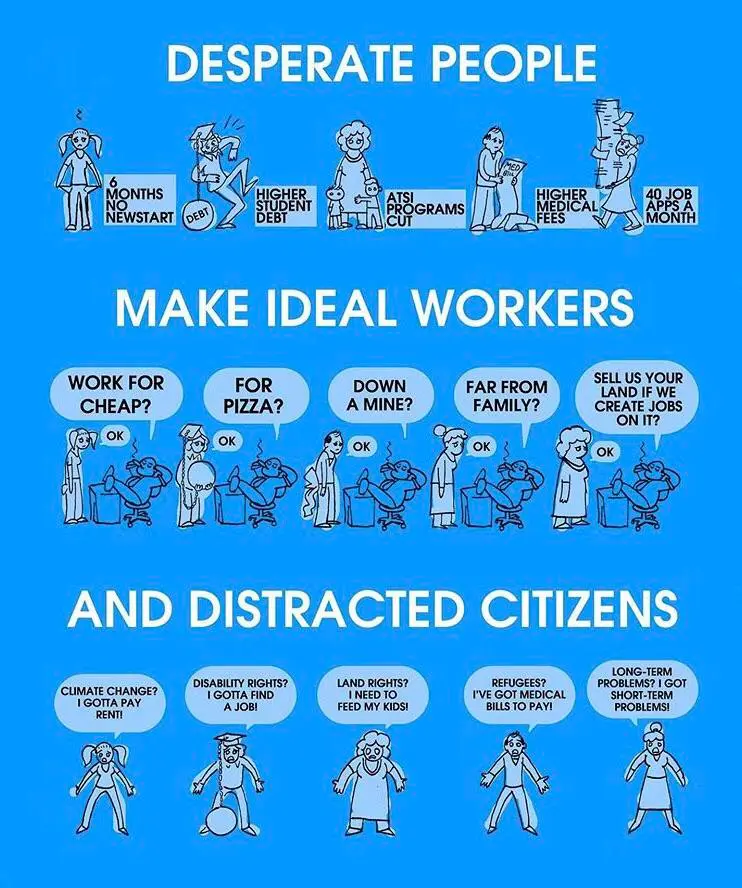
That’s precisely why organized labour has been systematically dismantled in the US. Back in the day there were strong unions, mutual support groups, and so on. These systems are key for workers to be able to take collective action like general strikes.
Again, I think people should be aware that there are alternatives to Signal, and be able to make an informed decision on the trade offs that matter to them. My personal view is that there are absolutely better platforms than Signal, but if people understand the potential risks with Signal and use it because it’s convenient or their other contacts use it, etc., that’s entirely up to them. It’s just not what I would personally recommend if people want privacy.
You just gotta love the narcissism these people have.

Yes, but those are basically separate platforms like Session. Signal does not federate, and there’s only a single server in the US that requires your phone number to sign up.
Idk what misinformation and conspiracy theories you’re referring to here are. Yes, food is literally being poisoned, and there’s an ongoing class action about it in the US right now.
Maybe actually read the thread before commenting? I’ve literally addressed this here https://lemmy.ml/post/43791761/24225658
I don’t believe I ever asked you to sealion into my threads in the first place. It’s some great loss that I don’t have to see your drivel anymore. 🤣
Ah yes clutching them pearls, when called out on outright lying.
Bye!
I’m not advocating for using Session specifically, I just listed it as a viable alternative to Signal. Given that it’s forked from Signal presumably it’s an easier switch for people who like the general mechanics of Signal and its encryption system.
I even took the time to quote that, because it’s important.
What’s important is that you’re quoting me out of context, and that makes all the difference. The actual statement you’re replying to is:
You don’t have to trust anybody when you run your own server, or you use a server that doesn’t collect information it has no business collecting.
The fact that you proceed to quote me out of context and then accuse me of being wrong shows that you lack even a modicum of intellectual integrity. Then you proceed to make a straw man arguing against something I never claimed.
Just becuase it’s less likely to find nefarious code in open source doesn’t mean it doesn’t exist.
So yes, this is very clearly a discussion in bad faith, where you’re arguing against a straw man while ignoring what I actually wrote. It’s especially incredible since I even followed up with a more detailed explanation which you just ignored:
There’s a big difference between having confidence in open source code that has been audited by many people, and knowing for a fact that the service collects specific information. In the former case, you can never be absolutely sure that the code is not malicious so there is always a risk, but in the latter case you know for a fact that the service is collecting inappropriate information and you have to trust that people operating the service are not using it in adversarial ways. These two scenarios are in no way equivalent.
Do better.
My original comment that you replied to was explaining the defects. People are free to decide whether they want to accept them or not. Your comment is saying that it’s harmful to discuss these defects which implies that we should just ignore them.
Session actually does implement a form of forward secrecy through the Session Protocol. https://getsession.org/blog/session-protocol-v2
Money is not fake, it’s arbitrary.
While distinction between fictitious and arbitrary is technically correct, it’s just pedantry which misses the actual point of the colloquialism. It’s not that it doesn’t serve an exchange function, or that the dollars in your account are somehow illusory. It’s an expression of frustration with how we have chosen as a society to treat economic institutions being treated as laws of nature, rather than as social construct which we ourselves have invented and therefore can revise at any time. As in much public discourse, the statement is a rebuke to the widespread habit of treating financial constraints as absolute barriers, beyond which no serious thought need be expended, and as an excuse for avoiding responsibility to address the underlying human issues. Correcting their metaphors ignores their argument. If the rules that govern human wealth are entirely of our own making, they can also be systematically changed whenever those rules no longer serve our common good.
Food is not being poisoned, what a crock of shit.
Meanwhile in the real world, there’s literally a lawsuit against companies knowingly designing, marketing, and selling food products that are harmful and addictive.
- https://www.olshanlaw.com/Advertising-Law-Blog/food-manufacturers-to-suffer-increasing-legal-pressure
- https://sfcityattorney.org/san-francisco-city-attorney-chiu-sues-largest-manufacturers-of-ultra-processed-foods/
- https://www.venable.com/insights/publications/2025/09/emerging-litigation-over-ultra-processed-foods
- https://hls.harvard.edu/today/the-new-case-against-ultraprocessed-food
Going on about how it’s being poisoned makes you sound anti-science or like someone trying to scare people into watching their paid content.
Again back in the real world, the history of US water pollution is unfortunately marked by numerous instances where industrial discharge, coupled with weak or failed regulation, has poisoned water supplies. Just a few examples which you could’ve trivially googled yourself
- https://environmentamerica.org/michigan/media-center/campbell-soup-admits-to-more-than-5000-days-of-clean-water-act-violations/
- https://www.hbsslaw.com/press/oregon-groundwater-contamination/oregon-lawsuit-alleging-nitrate-polluted-groundwater-filed-against-power-company-and-dairy-manufacturer
- https://www.selc.org/news/the-city-contaminating-almost-900000-north-carolinians-drinking-water/
You have to trust the people that wrote the code.
There’s a big difference between having confidence in open source code that has been audited by many people, and knowing for a fact that the service collects specific information. In the former case, you can never be absolutely sure that the code is not malicious so there is always a risk, but in the latter case you know for a fact that the service is collecting inappropriate information and you have to trust that people operating the service are not using it in adversarial ways. These two scenarios are in no way equivalent.
Which is fine, but it’s a choice to trust them.
It’s a choice to trust the entire open source community around the project and all the security researchers who have been looking at the code.
Frankly, I have trouble believing that you don’t understand the difference here and are making your argument in good faith.






The question here is why not get people to switch to a better platform like SimpleX or even matrix with something like Element. I don’t find that Signal does anything better in practice.