Going to go with a video game: Outer Wilds. The game is very story and mystery oriented, so I don’t want to spoil it, as that can ruin the experience. In short though, it’s an exploration game where you get to do your first flight around a miniature solar system - exploring it freely without a linear sequence or quest markers.
The story is told in a nonlinear way, depending on how you explore it, and the way it comes together and the conclusion it reaches were amazing to discover.
Such a fantastic game.
Stranger in A Strange Land was called “the hippy bible” for a reason…
It was written in the 1960s tho, so even the “woke” parts can be pretty problematic. That just means society progresses tho. If 60 year old media doesn’t have anything problematic in it, it means society has stalled instead of peogressed
The problems with this book are not just “a product of it’s time”. There were authors at the time who could write women characters, Heinlen just wasn’t one of them.
This was my favorite book when I was in my mid 20s. I tried to read it a couple of years ago and just couldn’t.
I’ve always had problems with Heinlein. Early on, my problems were more that his dialogue just seemed… too pat. He couldn’t separate his characters in his mind, so they always had the perfect comebacks to what each other were saying.
And as I got older, I have more and more problem with his women. But then again, I adore Isaac Asimov, and he can’t write women well, either. But better than Heinlein.
I would say that Asimov cannot write human characters. All his characters are almost robotic. I still love his writing, and he plays with logical reasoning extremely well, but I wouldn’t go to him for well-rounded characters
I liked the engineer types in I, Robot. I thought they were dated (as they were dated when I read them in the 80s and 90s), but decently reasonable. heh.
But honestly, I have a hard time arguing too stringently against your asssertion. lol. Especially women, but yes, he was more comfortable with science than people.
Then again, the times I’ve tried writing… I’m not good at writing people and I figured that out. But for me, I think it’s the ADHD. I don’t know what the hell normal people do. lol
I honestly believe Asimov was far in the autism spectrum because of how he describes people as purely rational beings.
Talking about I, Robot and talking as a woman in STEM, he actually was quite good in noticing how the environment was not woman-friendly and deduce from there. The main woman in the story is a very recognizable character. (I forgot her name, she is stern and strict, good at her job but has no personal life outside of it. You feel she has too battle against the environment at every turn, and even while being really good at her job her department is a one-person group)
You know, over the past day or so in this topic… I’m starting to wonder and/or maybe realize that’s probably a thing. I have severe ADHD, and when I’ve self-evaluated for autism, score incredibly high on the social side (not so much on the texture/hobby sides). I’ve always had some troubles with understanding some of my fellow humans (while at other times feeling like I had special insights in some situations)… maybe that’s one reason I liked Asimov more than some. lol
Also: Susan Calvin, one of my favorite characters. :)
I’ve recently come to terms with the fact that I am somewhat on the spectrum as well, and suddenly quite some things make sense. In particular the type of writing that I like and how I express myself… I mean, I started reading again in my late teens to figure out how people tick, so, yeah
Regressed even if I might say
Thou are God.
I loved it! And Starship Troopers, just yo stay in topic and time, while changing everything else.
The Left Hand of Darkness and other Le Guin stories. Good timing on when I started expending my scifi reading in her direction; I was in high school, meeting more people outside my little conservative family and church bubble, trying to form new conceptual models for the much bigger world that I was previously insulated from.
The Left Hand of the Darkness was one of the few times I saw my partner cry for a book.
I recently read The Word for World is Forest, and while a smaller story it’s still really good. While The Ones that walk away from Omelas is extremely impactful.
Of her I often say: even her shits were pure gold.
I have to drop “The Dispossessed” here.
For anyone else scrolling by, you can read The Dispossessed here for free! :D

Anything by Le Guin. She’s a revolutionary and visionary. Imo greatest sci-fi author ever.
Le Guin is phenomenal. Her acceptance speech at the 65th National Book Awards makes me tear up to this day.
“Hard times are coming, when we’ll be wanting the voices of writers who can see alternatives to how we live now, can see through our fear-stricken society and its obsessive technologies to other ways of being, and even imagine real grounds for hope. We’ll need writers who can remember freedom — poets, visionaries — realists of a larger reality.”
Mornings in Jenin. Growing up as a child of refugees, it was difficult to fully grasp the horrors of Israeli violence against Palestinians, my parents shielded us from the worst they witnessed, only telling us of the good memories before they were forced to leave. This book helped shape who I am today, motivated me to learn the truth, and exposed me to a whole world of non colonial literature, both fiction and non. And while it is a story of fiction, it is based on the reality of the ethnic cleansing of Palestine, ongoing for 78 years now.
In his Discworld novels, Sir Terry Pratchett gave me a love for humanity. He’s so good at writing, but especially at characterization. The people he writes are just so human, and for me, it increased my empathy for people overall.
Also, even though I’m an atheist, after having grown up fundie Southern Baptist, I’d like to think that if the spiritual and supernatural exist, that it works somewhat along Discworldian lines. Certainly there are two Deaths that I wouldn’t mind meeting: The Discworld Death, and the Sandman Death (Neil Gaiman).
But it was with Pratchett’s help that I’ve come to believe that there are no good people and no bad people. Just people, and all the choices they make. Which in some ways makes “evil people” more terrifying, because I believe they make those choices. But it’s also heartening: People can choose to be better.
The principles expressed in the novels helped me change my views on what’s important: I think the most important thing you can do is to make others’ lives a little better, if you can. Huge projects like social safety nets, but even making a stranger laugh for a moment and brightening their day.
This life is all we get, and anything that makes it better is the main thing that’s worth anything at all.
!!! WARNING. SPOILERS. !!!
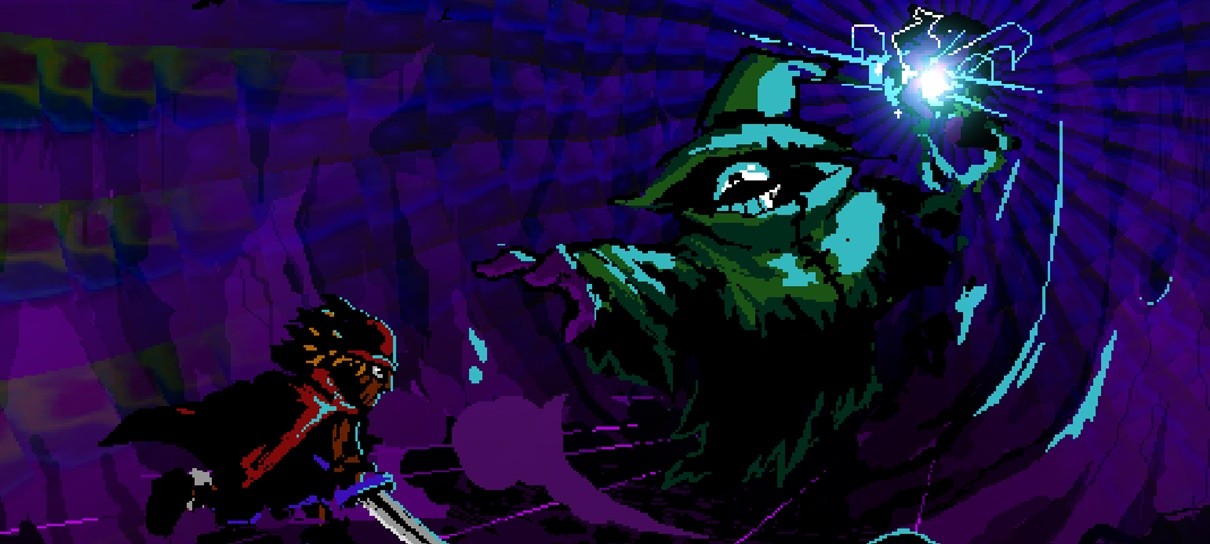
Everhood for me. It’s divisive, if you manage to connect with the game and don’t bounce off it, I think it’s one of the most emotionally powerful experiences I’ve gone through at least. The themes just happen to be intensely involved with most of my longest standing philosophical and existential struggles and the game was cathartic in dealing with them. Plus it’s psychedelic, eastern/buddhist inspired, and is fully capable of rendering you emotionally raw.
That the asynchronous musical real time combat works so well for me just sends it even harder. The OST is nearly 3 hours long and nearly every song is a banger. Quite intimate at times, as the game I think deliberately ties the song to the character’s very “soul” as you’re struggling to kill them.
The basic premise is this: You may know, if you’re in the right type of debate or philosophy communities, how often the topic of dealing with death comes up. Atheists I often find saying living forever would be absurd mental torture and maddening. Even though I agree I’d still choose to be ageless all the same as I’d rather that than not existing. Unpopular opinion. I don’t expect anyone to agree with me and that’s fine, I’m weird. Well, this game explores that scenario and certainly doesn’t agree with me either.
You’re orbiting the very last star in the entire universe, experiencing a later stage of Universal Heat Death before the last thing happening is evaporating black holes exploding in gamma ray bursts. With people who countless eons ago figured out how to become ageless. They’ve lived for so long they’re physically twisted, messing with their forms out of sheer boredom and they’re various flavours of insane.
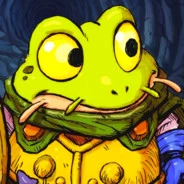
Your character is pressured into finally ending the lives of the remaining survivors and then destroying the last star and reality itself. Truly ending it all. It’s muddy and the game isn’t going to let you go about that without feeling conflicted. The main character has tried before, failed, and lost their memory out of grief, laying dormant in the forest for who knows how long before this amnesiac second attempt begins with the encouragement of a frog man who very much wants to end reality itself. You can refuse btw, and get an extremely difficult fight out of it.
This is all played out with Undertale styled humor and characters. It’s certainly under the Earthbound branch alongside LISA but much less crass.
At the end, I walked away being far less afraid of death and that’s a big deal for me as an atheist who before this found zero comfort in the responses people gave online when it came to dealing wirh death when you’re unwilling to believe in comforting lies like religion. I’d still choose to be ageless if I could :p but at least I’m at peace with reality for now.
If I caught anyone’s interest I think it’s best played on Expert so the fights really feel like the narrative wants them to feel: tooth and nail struggles. If you end up enjoying it, the sequel is an utter travesty and the biggest disappointment in a form of media I’ve ever experienced.
Anything Monty Python. Also, Gravity’s Rainbow.
Dogma helped me see how absurd religion, specifically Catholicism, was and helped be begin to untangle what it all meant for me, a hyper-religious teenager at the time.
Idiocracy shattered my delusional optimism for the future.
Imajica by Clive Barker flipped a switch in my (then) teenage brain making me understand that “fantasy” books don’t need to have swords, wizards, and all the other tropes. That the idea of “fantasy” as a genre is far far richer than I imagined.
Same! It turned me on to the whole modern, urban, fantasy genre which is often more compelling due to being able to relate to the settings.
The Dark Tower series by Stephen King. The ending is just chefs kiss and made me think about my Dark Tower
It didn’t change my thoughts on the whole world, but the way demons are depicted in the anime Frieren changed the way I think about entities that use language for manipulation rather than communication: Their words are weapons. And assuming sincereness in any of them is dangerous. Immediate blocking is more appropriate than wasting time with them.
Children of Men. Lack of human sustainability is depressing.
the truth machine made me realize that i never have to lie again
tales of symphonia taught me that trusting everyone you meet is not as stupid a decision as it looks
and simulacra and simulation taught me that no one needs to lie in order to fool you
lots of learning about what it means to tell the truth
Masters of the Universe.
Fisto really gave me a lot to think about when it comes to cultivating useful skills.