- It should be growable in a small space.
- Would be nice if it didnt require lot of attention.
- Should fill my stomach
- Would be nice if I can grow lots of it in a small time.
I dont know why you care about point #3 the way I look at gardening is you should plant the stuff that is most expensive in the grocery store, but doesn’t require a lot of space to grow.
For me that’s things like lettuce, tomatoes, certain peppers, chives and other pricey fresh herbs. Basically anything that doesn’t ship and sit well. I would never grow potatoes because I can get like 15 lbs of them for five dollars when they are on sale.
If you actually have space one of the best crops is winter squash in my opinion. They grow like crazy and can produce massive yields. They are calorie dense compared to other vegetables and squashes like Hubbard can sit in a cellar for practically the whole winter before going bad. But those things will spread across your entire lawn lol.
Cuz im hungry
To save money? Start by lowering your standards. It’s nigh impossible to grow as good as you can buy for less money. However, you can grow something for very little money. Go for one of the classics. Tomatoes, peppers, and simple leafy greens can be grown in very basic setups. I’ve done all three. Potatoes can can be grown in free cardboard boxes filled with an appropriate soil. If you want fast growing and somewhat economic, you could get into the world of mushrooms. Just be aware, it takes some research and work to be able to do without buying a lot of equipment. It’s technically possible to grow grocery store mushrooms from cutoffs, in a medium made from free sawdust, woodchips, used coffee grounds, and the like if you learn a bit about it.
Gardening is an incredibly expensive hobby from a resources, space and time perspective on top of the investment of start up. Farming exists because gardening isn’t efficient enough to save money, it’s why calories have historically been so expensive
Herbs are often expensive to buy and fairly easy to grow and give you a big quality of life boost, I say start an herb garden, that’s actually worth it
The only useful thing I can think of is herbs. They won’t fill your stomach, but theyre nutritious and flavorful and expensive in a grocery store. I have a potted rosemary that’s been alive for ~6 years. Unfortunately, rosemary is one herb we rarely eat. What I really need is an enormous amount of basil.
This, also summer squashes and peppers. Rosemary, sage, and thyme take a while to become established, like a full year, but once they do ypu will have more than you need. Other herbs like basil, parsley, and cilantro grow quickly and benefit from being planted in cycles. Especially if you eat a lot of them. Growing your own garlic may also save you money, but only if you use a lot.
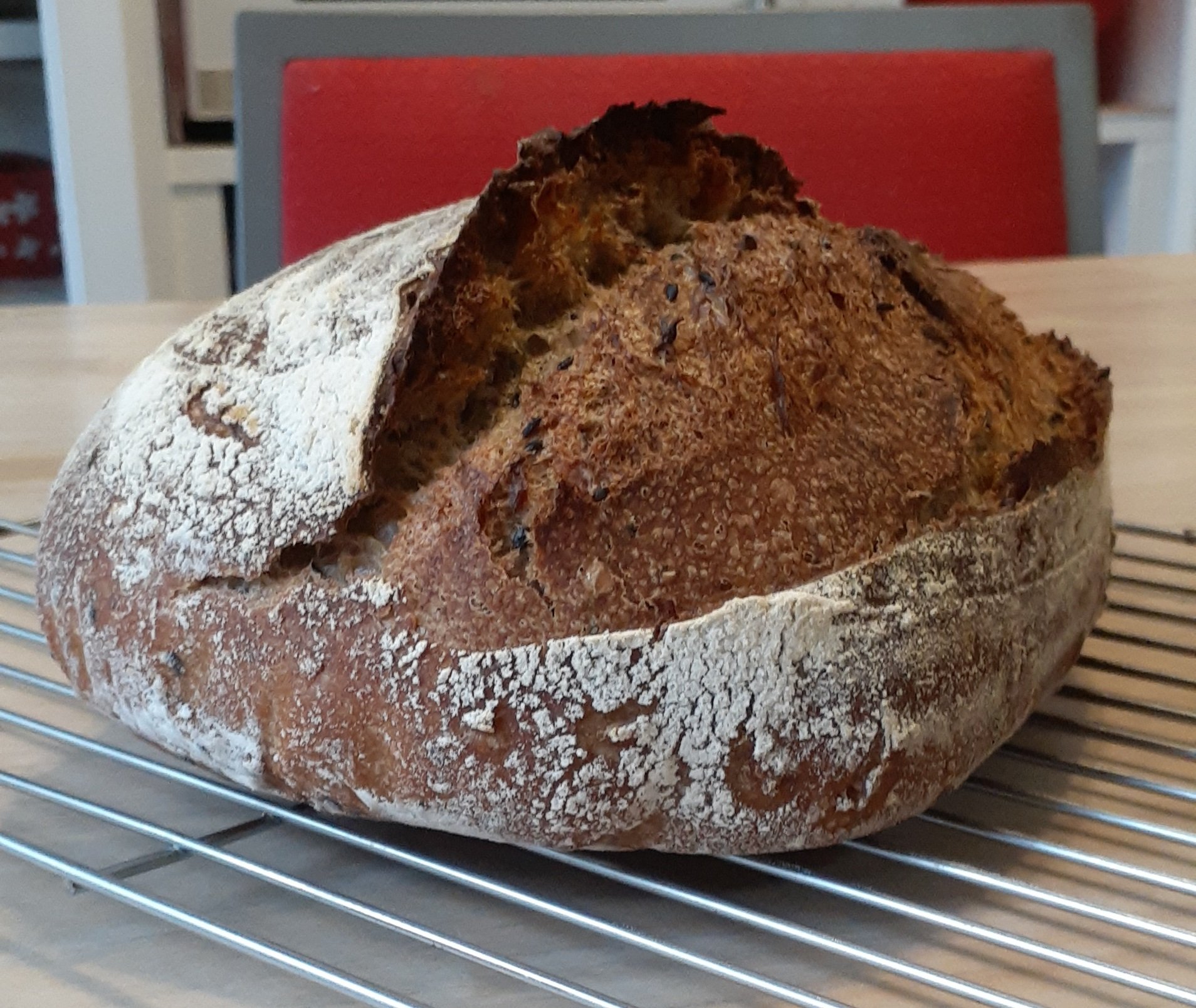
rosemary is super hardy and has outlived every other plant in my front and back yard. we get so much rosemary I give it away to the neighbors and we also make rosemary bread. it’s delicious.
Absolutely agree herbs are a good starting point. Make some roast potatoes with rosemary salt. The most expensive part is probably the rosemary.
As others pointed out herbs might be the only thing that come close to being cheaper. Speaking oft herbs - Weed might be the only thing that fits your requirements thats actually cheaper this way.
Whatever you end up growing, if you have the space for it consider setting up a compost pile (You can compost in a tiny bucket, it just takes longer than hot composting). Reason is that basically any plant you grow can benefit from compost, but buying decent compost at the store is kinda expensive.
It either saves you money or it doesn’t take a lot of effort. Can’t have both. Growing even 5% of the food you eat is barely a hobby anymore but rather a job.
Add in the small space requirement. I did some hydro in about an 1m^2 space and it was enough for a few salads a week.
It really depends on where you live. I’m in zone 10 (subtropical) and can grow successfully:
In the cold season - fennel, collard greens, broccoli, cauliflower, cilantro, arugula, lettuces. Sometimes radishes. Eggplant and peppers (eggplant can last a few years here if no freeze)
In the hot season - okra, watermelon, basil, eggplant and peppers, sweet potato (Stokes Purple). Tomatoes. Hong tsoi (plant survives winter but produces in the rainy season)
Trees - citrus, figs, carambola, longan, loquat, bananas.
If you are in a cold place with little space, radishes are fast growing. Potatoes are filling and good to do in containers so you can find them. Greens are very healthy with so much nutrition per calorie, and collards don’t mind a freeze, neither does fennel.
What do you normally buy? If you live on potatoes then your food bill is very low and you should grow potatoes to bring it down.
But potatoes are also very cheap to buy, which makes them a poor choice if you want high value per m². Herbs are what I started with in my garden. Rosemary, sage, chives and mint. Got some bay trees that I started from cuttings last year, hopefully they will become productive at some point.
Then got an allotment this year, high value crops I have are:
Jerusalem artichokes - tubers that are used like potatoes but rarely see them in shops and when you do they cost a lot. Related to sunflowers.
Taunton Deane kale - a perennial kale that grows up to 2m tall.
Hope to keep growing both for years to come.
I remember one summer growing up my parents cooked a lot of zucchini. It got to the point where we were like “pump the brakes on the zucchini we can’t take much more”. Turns out it was growing in the compost pile quite a bit from discarded seeds. Granted, that compost pile is very healthy with red worms.
With zucchini don’t use your own seeds. They can become poisonous.
I didn’t know this, but it seems to be fine as long as you’re able to taste the bitterness and don’t keep eating it if it’s gone bad.
Did you miss the part that said the toxin has a bitter taste so it’s only a risk if you don’t have much of a sense of taste? 1 death in a decade is incredibly low.
set your goal of what you want to accomplish. are you just trying to save money? then you can be a bit risky in your actions. are you growing food because you might not have enough to eat later? take less risks.
the only thing that needs little to no attention are root veg. potato, carrot, radish, beet, rutabaga(sweed), etc. keep the soil soft and loamy and moist (not drenched or you will rot your food). harvest and “dry clean” the roots leaving dirt isn’t a bad thing but washing them with water will start a process you can’t stop and will need to eat them quickly. keep in a dark dry-ish(around 20-30% humidity) cool place and wash/peel when you’re ready to eat.
greenbeans, peas, tomatoes all grow vertically. I preferred growing cherry tomatoes because you will get a larger harvest and they preserve really easily. greenbeans and peas like nitrogen high soils, tomatoes like an alkaline soil(from my experience they do really well on top of old trash/wood burn pits.
don’t overlook fruits. watermelon is easy to grow but hard to keep. some types do well though. I grew some “black diamonds” last year and the vines were covered in thick white hairs that stopped the squash bugs from attacking it. I ended up with a whole 12 melons ranging from 3-10 pounds and they were sickeningly sweet.
ground cherries are similar to tomatoes, raccoons will eat them. harvest often, or you’ll lose your sweet treats.
I spent around $3k over four years (20-23). each year since 23 I’d say my garden saves me around $1000-1500 a year in groceries and that only increases as prices increase. every meal I have usually has something from the garden.
the real way to save is preservation. can it, dry it, freeze it. if you start your garden this year, you won’t likely see savings until next year (but you will appreciate your meals and savor every bite.)
Depending on how small the space is you won’t be saving much money because yields aren’t as great as one might think, but it is worth trying if only for the experience and what you could learn from it.
Tomatoes can be grown in a relatively small space with some creativity.
Cherry tomatoes can be grown in small flowerpots around the house.
Potatoes can be grown in planters, I’ve seen potatoes grown in planters made out of two or three tires stacked.
Mushrooms can grown in closets.What I think it is most important to save some money is to learn to preserve, either what you manage to grow or whatever you can buy cheap when it is in season.
Also I would stay away from hydroponics, those things are like taking care of a fish tank.
Northern Europe:
There is an issue with effort vs cost in the store. The easy stuff is usually really cheap in the store (eg potato). The expensive stuff (eg paprika) usually requires a greenhouse to survive. I’ve tried growing it indoors in the window but they don’t thrive there.
One exception I can think of is strawberries. Reasonably easy, space per plant is low, somewhat expensive in the store.
If you have a tiny yard you can try red/blackcurrants and raspberries.
There are so many wild blackberries growing around where I live that growing berries seems like a waste of my own space. I forage for berries instead.
Potatoes grow in small spaces and don’t require a lot of attention, but they won’t save you much money.
I think the most bang for your buck home garden are things you wouldn’t buy because they are too expensive but can grow easily. Herbs are a good choice.
In my garden I mix those with things that are cheap, but fun:
- asparagus (perennial, almost zero effort, get a few delicious means out of the 5 plants we have each year)
- fresh beans (easy to grow if they don’t get eaten by various garden mammals) and not something I usually buy fresh.
- dried beans (not a good use of a small space because the yield is low compared to fresh beans but super fun)
- potatoes (fun, use last year’s as seed and augment)
- sweet potatoes (fun, still producing them from slips I bought in 2022.)
- tomatoes (local fresh tomatoes are outside of my budget in general except for the ones I buy for canning in September)
- garlic (very, very low effort and I use last year’s as seed)
- carrots (fun and delicious)
- raspberries (I never buy fresh berries, and the raspberries need nothing more than pruning in the spring)
- weed (almost free weed rules)
I don’t grow lettuce or most leafy greens because I have a slug problem (no advice please) but have hydro lettuce on my “want to try list”.
I’m going to try asparagus, I’m also able growing a ton of zero effort food.
I just planted some. The packet said not to harvest the first year, harvest lightly the second, and then it’s party time. Kind of intimidating, honestly, to need to keep it alive that long.
Lmao we were so scared about stressing it after keeping it alive for so long that we waited 4 years before taking any substantial amount.
That might be where I end up too!
My front yard is crazy dry and has a fair bit of sun. That makes it bad for most crops but asparagus loves it!
That’s quite a big list. Thanks for taking the time.
Check out the gardening communities! People are doing some really cool stuff and it’s nice to be inspired as you plan your own garden.
Growing weed is the actual money saver here if it applies to your situation. Last year I had a plant yield 200g dried with definitely less effort than thats worth.
My garden is about 10ft by 12ft. I grow two varieties of tomatoes on a total of four plants, two varieties of cucumber on a total of fourteen vines, two varieties of zucchini on a total of four plants, two varieties of winter squash on a total of fourteen plants, and I have seven small watermelon vines plus seven cantaloupe vines.
Attention and work to make it happen can depend on a lot of things. I am able to grow so much because I am using as much vertical space as possible. I have six large fence posts supporting two five foot by eight foot heavy wire panels that support my tomatoes and watermelon plus cantaloupe. I have two lighter gauge panels that are four foot by eight foot bent into an “A” shape to support my cucumbers and winter squash. I have some cheap tomato cages to support my zucchini. The ground has been covered with cardboard where all plastic tape and labels have been removed and it’s just the cheap brown stuff without printing. It was a full day worth of work to put everything in but the end result is relatively cheap fresh food and if you continue using the materials and replant seeds you save the cost goes down every year.
For watering I’m using a misting system that sprays water directly onto the planting areas that is controlled with a zigbee hose valve which is controlled by HomeAssistant. I had a couple soil moisture sensors but even though they said they were outdoor rated they all died… so for now I have to manually chose when to turn it on or off.
You will still have to worry about pests but diatomaceous earth (the super fine stuff) helps keep a lot of them at bay along with neem oil plus some dish soap in a sprayer. But you have to reapply after a storm and look for them every couple days.
Remember that your garden will be dependant on your local conditions. And you need to get started ASAP to maximize your growing season, a seed packet will show the minimum days to harvest but you will get food to grow on many plants for a few months. If you buy plants that are already started your time to harvest will be shorter than from seed unless you are able to eat the sprouts but you are not going to get food next week. The caveat is that plants cost more and will often be root bound so you need to get the roots freed up so they can grow.
It’s also worth getting a soil test done because some things need more potassium and phosphorus to produce food. And you may want to add a little fertilizer part way through the season.