Hello, please change the title to “hmmm”. Thank you.
E: Oh, it’s gen ai. Fuck…
Done. Sorry, didn’t see the rules in the sidebar from my Lemmy client.
Not buying it: How would you charge (generator) and discharge (motor) the car at the same time? The electronics and software is designed to only charge the battery when parked. My car won’t even shift into gear if it’s plugged in.
I mean, this one is fake, but there is a company creating haluers that do pretty much this. Have a small battery they recharge with a generator. According to them, a generator is a lot more efficient and enviromentaly friendly compared to normal engine, since it runs at constant rpm.
That is any PHEV.
My understanding is that most PHEVs use a hybrid drivetrain to drive the car directly from the combustion engine.
Name and (the opposite of) shame!
You’re talking about Edison Motors, right?
Yes, but I couldn’t recall the name. Thanks for mentioning it.
Actually, the constant RPM ones are less efficient, the inverter generators that are able to vary with the load that are more efficient. But yes, they are better at turning the fuel into usable power. Traditional ice engines lose something like 40% of the power made just in Losses from gearing transmission axel etc. So while it may seem silly technically using a generator to charge an EV is more efficient
FWIW, people have made a real working version of this concept before.
Ok, this is most certainly in Mexico.
The Oxxo gives it away.
This is basically what every EREV is. The generator is just integrated into the car, otherwise it’s essentially the same thing.
It’s also how modern freight trains work minus the battery. The big diesel engines only produce the electricity for the electric motors.
At the same time, I’ve wondered if it would be helpful for EVs on some long-distance road trips to tow/stow a generator for overnight and emergency charging. Charging stations are popping up more and more, but if you’re saddled with an obsolete or under-served charging port type (e.g. Nissan Leaf), having a generator would be valuable insurance.
Every EV can just hook up with a (mostly) passive adapter to any outlet and get a charge. It won’t be fast (especially if you are cursed with a 110V outlet), but even in the boonies an overnight trickle charge will get you to the nearest fast charger. Just get the relevant adapters for your car.
This is basically what your generator would do except you want to lug it around instead of leveraging the cables that we pulled within driving distance of everywhere but the most remote trails? The whole point of electricity is its versatility and ubiquity!
FYI using a wall plug to charge an EV is a perfectly normal thing to do. For a small(ish) commute, regular 220V@10A is way more than enough to get back to full overnight. It won’t give you 500 km of range, but only freaks and truckers drive 500 km every day.
FYI using a wall plug to charge an EV is a perfectly normal thing to do. For a small(ish) commute, regular 220V@10A is way more than enough to get back to full overnight. It won’t give you 500 km of range, but only freaks and truckers drive 500 km every day.
When I’ve crunched the numbers in the past, more efficient EVs would get something like 50 miles overnight for a commuter with just a 120V outlet to work with, so if you get one full charge over the weekend, it’ll still be fully charged by the next weekend if you didn’t deviate from your commute, or a maybe a bit lower if you did.
Mostly right but in the US we have way more dead zones, and we also have 110-120v outlets in most places. There are 220-240v outlets, but mostly only for electric ranges, dryers, and big AC units, and almost never outside a house or hotel. And charging at 120v 20amps does kinda suck. About as much as using this generator would.
That’s all true. And FWIW, I’ve only ever charged my EV on 120v at home, so I’m familiar with the limitations.
I’m thinking of the worst case where my trip planner accidentally sends me to a location where the intended charger is long gone or in-use, and I have too little charge to make it to the next viable location. Also: it’s 3AM and nobody is open. Sure, I could sleep that off in the car and/or throw myself on the mercy of some hotel, but that’s sketchy in other ways. Or maybe I’m stranded due to a moment’s inattention?
To me, that all reduces to “be resourceful” so why not pack some additional resources?
damn, nissan leaf is under served? I guess that product placement in sim city whichever fucking year glass box was didn’t pay off
The new ones have the standard fast charging ports, but before the 2026 model year they’re stuck on an old DC fast charging standard that’s only available at a fraction of all charging stations.
If we are going that direction, why not battery packs that fit in the trunk?
I’ve been thinking about getting a Slate truck eventually, and I’m suddenly realizing a generator on a trailer might be good for overlanding, since there aren’t any chargers on remote trails.
Not really. Not all energy comes from fossil fuel…
He’s not talking about full EVs, he’s talking about “Extended Range Electric Vehicles” which are EVs with a motor that only charges the battery on long trips.
Basically a specific kind of plug in hybrid.
https://carbuzz.com/extended-range-electric-vehicles-what-erevs-look-like-in-2025/
Today I Learned. Thanks.
I’m not sure about this, surely an EV wouldn’t allow charging while in motion as a safety measure against driving off while plugged in?
But then, there’s this photo right here unless I’ve been suckered into believing AI edits again.
Tesla won’t you put it into drive if the cable is attached. Even if this is some hacked firmware, that tiny generator will give you like 4mi of range every hour. Definitely a meme.
It’s also entirely possible someone had to transport that generator and decided to have some fun with it and fuck with people.
Generator doesnt look to be strapped down or secured to anything I think it’s been shopped or edited in.
Sus
Last I heard it was a performance art piece to illicit this type of conversation about where the electricity comes from.
That’s a stupid conversation, though.
Electricity is made in huge power plants, which are a lot more efficient due to their size.
And a wider EV adoption allows for more renewable energy generation, since their batteries can act as a buffer to balance out the power grid.
With a smart meter, you can set your charger to draw power when the price of electricity is low (like when the sun is shining and its windy, so renewables produce a lot of power). Thereby consuming the peak power output.
And when there’s no wind and no sun, you can sell a part of your battery charge back.I think most art is a stupid conversation. Ever try to disagree with an artist? All they heard you say was “blah blah blah something about you being a consumer sheeple.” It’s maddening when it almost always boils down to “do you like the art or not”… or it’s money laundering and they don’t give a fuck.
You’re absolutely right. This is just a fake.
Yeah, that’s supposed to be impossible. Either they’re not moving and it’s a staged shot (unlikely, since they’re in the middle of traffic and there appears to be motion blur), or they’ve fiddled with the car to make it think the charging door is closed, or it’s an edit.
I’m suspicious of the motion blur, personally, because the traffic looks too tight to be moving much, so I suspect an edit
While EVs won’t allow starting the car whilst charging, they will allow the charger to be open, and the cable is likely a dummy so wouldn’t be registered as “plugged in”. Thus allowing this joke outfit to drive around like this.
I own a Tesla, and I also own a broken charger. I assure you it won’t let this happen
Just went out to mine, plugged a cable in with nothing on the other end. Could pull off fine
I went out to mine and realized I don’t own one so I have nothing to add to this conversation.
Giving the photo the benefit of the doubt, it’s also possible that this Tesla owner had to bring a generator somewhere for unrelated reasons, and thought it would be “funny” to hook it up to the charge port on his car as a joke.
My point is that wouldn’t work, unless the car was in park. A Tesla will simply refuse to move if a charger is connected
You 100% can plug in an unpowered mobile connector and drive away. If it’s not actually on a circuit, it does not detect it, does not light up, and does not lock the charger (the plastic notch underneath).
As this comment explains, the car can detect a plug that’s not connected to anything.
That’s not a charger though. EVs can’t take the direct power from a generator. It needs to communicate with a base. So that “cable” is impossible and is a joke.
Doesn’t matter. The car knows something’s plugged in, even if it can’t talk to it
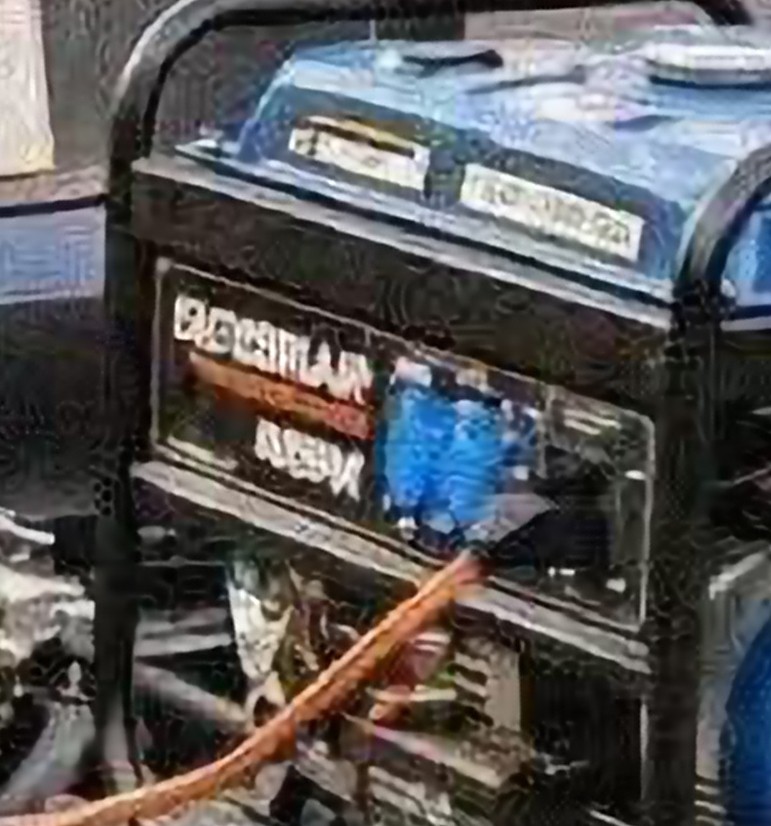
i found a higher quality version, not sure of the original source, and its definitely AI:

regardless though, i did look into if this is possible. no matter if the connector on the vehicle is NACS/SAE J3400 (the “tesla” connector") or SAE J1772 (CCS 1), for AC charging—which is the situation here—it will be the same (note that this will not exactly apply to vehicles using CHAdeMO, GB/T, etc.). i went with this document that briefly outlines NACS. this is the proper standard, but i wasnt able to find a copy gratis with my two minutes of searching. this should still apply to other vehicles with a CCS 1/J1172 connector, at least for AC charging!
now, since we are charging with alternating current, we have only five pins to deal with, seen here for NACS (for CCS 1, just ignore the two super giant pins, if present. otherwise it applies to CCS 1 too!):

the big two (HV + and HV -) are for supplying power, no matter the flavor of AC or DC at hand. with CCS, DC charging goes through the two big pins at the bottom, AC charging works the same way though. the ground pin is present for low voltage electronics to actually have, well, a proper reference to ground! (this is your zero volt pin).
finally, we have the control pilot, and the proximity pilot. the former is a digital interface for the vehicle and charger to communicate in depth about charging speed, battery status, etc. the latter however, which is of the greatest interest to us, handles the physical connection itself. this is where the name comes from: it handles when a charging connector is in proximity (plugged in) to the vehicle!
when measuring between the ground pin and the proximity pilot pin, if the vehicle is ready to accept a charging cable but none is plugged in, there will be five volts. if there is something compatible plugged in, resistors within the connector will pull the voltage down lower (to 1.5V), indicating that something is, well, plugged in!
here is the part of the charging connection schematic that is relevant to us:

R1 and R2 are just resistors (150Ω and 330Ω, respectively), and S1 is a (optional to implement) normally-closed switch—likely a button on the charger plug handle—that brings the voltage slightly higher (to 2.8V), to signal to stop charging and if possible, unlock the connector (if it is locking).
now, the resistors themselves are located inside the plug, and not the charger/power control unit. after all, if the vehicle manages to somehow move away, and the cable snaps off said unit, the vehicle can still be aware of if something is plugged in!
of course, if you want to defeat this, it is very simple: tape over the proximity pilot pin! as far as the charge port door goes? from forum posts i’ve seen, the vehicle will still drive, even if it’s a little whiney.
“but wait!” you say, “the vehicle can latch the connector into itself. can’t it just detect it that way?”
this would certainly vary by vehicle. for teslas, it likely can’t (or if it could, the engineers didn’t bother to). seen in this youtube video, the charge door slams into the object left in the charge port, indicating the vehicle probably doesn’t look at this.
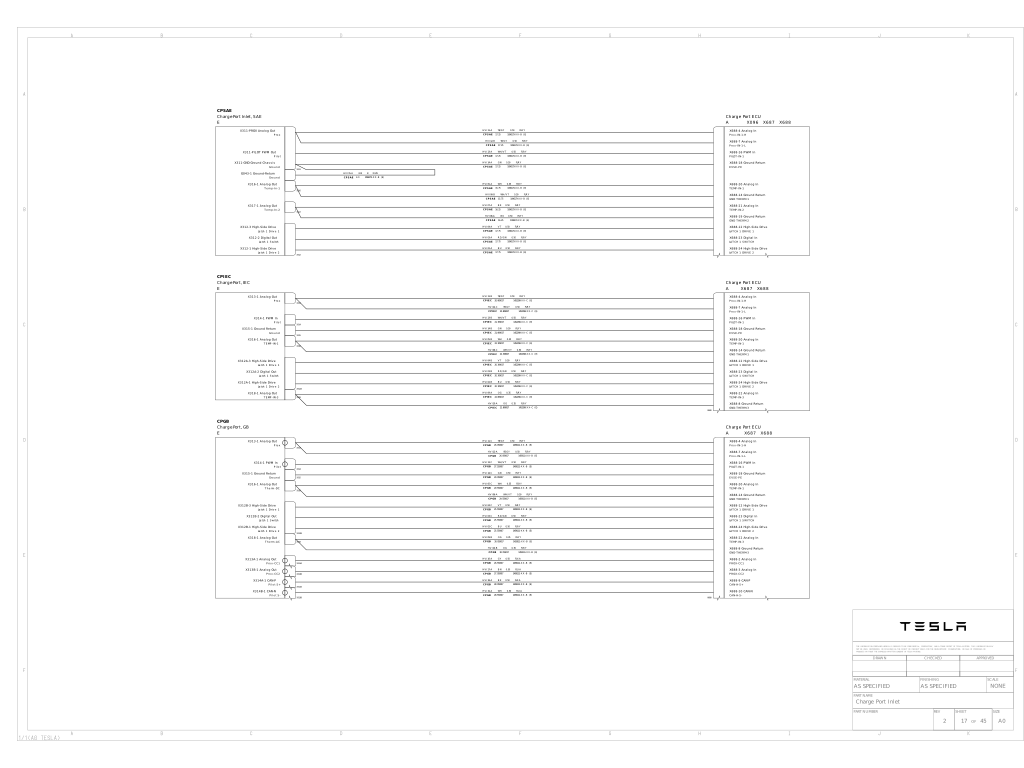
i also looked up the electrical schematics provided by tesla here (SVG):

the block on the left is the vehicle-side charging port assembly, the right is the actual vehicle computer. the three pins at the bottom handle the connector latch: X312-1 and X312-3, which power the motors, and X312-2, a switch/button in the port which is presumably what the vehicle uses to know it latched onto something successfully. remember, this is for the latch the vehicle extends—not the one that is simply mechanical and operated by the driver—and most likely does not provide enough information to tell if something is plugged in.
overall, if we are talking about teslas, your point does hold some merit; even if you snipped the charging plug entirely off a cable, the vehicle can still (if the plug is up to standards) detect it if it’s plugged in. however, something like this would not be unrealistic, even if the vehicle didn’t actually charge.
of course, this may not be the case for other vehicles! but that is beyond the scope here :)
three pins at the bottom handle the connector latch: X312-1 and X312-3, which power the motors, and X312-2
Of course every single pin in a Tesla is labeled ‘X-something’.
My guess is that it’s staged in that it’s how they’ve “dressed” the vehicle and are doing it for laughs
Honestly, a car with a small urban autonomy battery with a system where the rest of the battery is on a trailer would be a pretty awesome system, but it would require some massive adoption and car manufacturers are just going with ridiculously large batteries and fast charging for two reasons: they can sell it for more, and fast charging wears out the battery faster and requires more proprietary maintenance as a result.
A lot of EV innovations that could have been have been denied entry suspiciously when they’ve reached the bureaucratic industrial standardization that most major car manufacturers just seem to be able to gloss over. The car industry doesn’t want to see the profits from proprietary parts and maintenance go, and nothing beats a combustion engine for that. I still miss the Sono Sion, an EV with solar panels which would have been perfect for people who use their cars occasionally on the weekend and rental services. At least Aptera is still going strong.
“I bought this Tesla, but there’s no place to charge it, do you want it?”
“Sure.”
There is a huge missed opportunity of having modular battery packs that you can load into EVs.
You don’t need a huge battery for everyday, in fact it makes your drive less efficient.
What if there were standards and you could go to a gas station and rent some packs. Put them in the trunk (there would be slots and/or standard connectors), and then drive off.
Once road trip is over you return the packs (or you could buy instead of rent).
You can also just swap the packs in gas stations with fully charged equivalent, making long trips more flexible.
I think china did something like that with scooters.
There were attempts, but suvh a system just doesn’t work reliably. The pack has to be replaced by robots since it’s under your car (has to be due to space constrains and more importantly weight), and the amount of moving parts, reliability and safety concerns were a constant issue.
For scooters it’s no problem given the way smaller size and optimal position inside the chassis, but for cars this concept hardly works properly.
I am totally ignorant and this is baseless, but wouldn’t that charge the battery to go like 300 feet or something?
It would charge extremely slowly but you’d probably get a few kilometers of range out of it.
above all, the biggest issue i see here is the mounting (or lack thereof) of the generator on the trailer.
please, secure your loads!!!
The biggest issue I see here is the generator not casting a shadow like the rest of the trailer.
I’ve seen a few pictures like this before. The fun fact part is, this is could actually be pretty damn efficient if done well. Gas powered generators are designed to run efficiently and deliver power at a specific RPM. An gas car’s engine has to run and deliver power at a wide range of RPMs, so is generally not running at it’s most efficent speed.
Well, as far as I know Honda hybrids work this way.
New Honda hybrids don’t even have driveshafts connecting the engine to the wheels, it’s purely for generating electricity. Pretty cool imo
No thanks, will continue driving a 1.9 TDI golf, until It kills itself, because I actually like it.
1.9 PD - fragrance for men
That’s how most diesel trains work. The diesel engines run generators that power electric motors.
Making electricity this way, storing it in the battery and using it to drive a vehicle have their own efficiencies, all less than 100%. Also, these smaller types of generators aren’t that efficient to begin with. So I doubt it.
I remember reading an article about a “race” in Australia where they tested this out. The electric vehicle had lower total fuel consumption than the combustion car. Here it is: https://reneweconomy.com.au/tesla-ev-charged-with-diesel-generator-still-cleaner-than-conventional-car-61942/
Gas powered generators are designed to run efficiently for small shitty motors. Gas generators are not efficient. Especially if you care about emissions since they usually lack catalytic converters.
I don’t think this guy cares about emissions nor what happens to the generator when he floors the accelerator.
An EV with a range extending gasoline motor could also easily be configured to run at peak efficiency with the added benefit of being within the aerodynamic envelope of the car instead of being a trailered brick.
The fun fact part is, this is could actually be pretty damn efficient if done well.
This is essentially how diesel–electric locomotives work (since almost a hundred years now).
Checkmate, atheists!
Except every EV I’ve been in will refuse to shift out of park if the charging cable is plugged in. Otherwise: https://www.youtube.com/watch?v=YtS4h2az9Jo&t=48
It can be plugged in with the generator on, so no issue. Not that this image isn’t fake as fuck - the generator isn’t secured, and it’s connecting the AC generator plug directly to the EV port with a cable instead of using an EV charger. There are (were) some actual attempts at this: https://www.ecomotorsnews.com/en/news/electric-range-a-battery-trailer-reopens-the-long-distance-mobility-debate
Not sure why, but there seems to be a lot AI slop that’s basically this, except they usually have these ridiculous industrial generators with plumes of coal smoke.
That’s a good feature. I swear one day in a sleep deprived state I’m going to forget to take the gas nozzle out.
I understand this is in Brazil (see the stores) and they have few charging places.
It’s not just Mexico, this looks a lot like Mexicali, Baja California. It’s right on the border of California and a lot of locals there frequently hop back on forth over the border. Some live in Mexicali and work in Calexico or El Centro, some live and work in the US but cross regularly for family.
Their infrastructure is spotty, but largely assembled to be compatible with the lives of these border crossers in mind, so there’s definitely some EV infra, but not a lot.
Nope, it’s in Mexico. I can’t say what the situation is with charging stations, tho, since I don’t own an EV.
That generator does not look like it’s secured properly.